Get in Touch with Guanma

Industrial Labeling Solution Provider
Self Adhesive Film & Label Stock Manufacturer — Custom Coating, Lamination, and R&D for Industrial Labeling
Self adhesive film manufacturer Guanma engineers pressure-sensitive label stock for converters and brand owners across Southeast Asia, South America, and Europe. Our TH+VN dual factories run hot-melt, water-based, and acrylic PSA on PET, PP synthetic paper, and coated paper — 18 base configurations covering 9 industrial labeling applications.
CONFIGURATIONS
18 Base (3×3×2)
PRODUCTION
Dual Factories (TH+VN)
EXPERIENCE
10+ Years
MARKET REACH
3 Primary Markets
R&D
In-house PSA Dev.
CAPACITY
Industrial Lamination
The Industrial Labeling Material Stack — Why Stock Selection Decides Failure Mode
An industrial label fails on the production line, in the freezer, or in the customer’s warehouse — and 80% of the time the printer gets the call. The real diagnosis is usually one layer deeper: a mismatch in the underlying self adhesive label stock. Pressure sensitive labels are not one material; they are a three-layer composite — facestock, adhesive, and release liner — and each layer carries its own failure modes. Mis-spec any one and the assembled label loses adhesion, prints poorly, or breaks down under the application environment.
Self adhesive label material works through pressure-sensitive adhesion: the adhesive bonds to a substrate under light pressure without water, heat, or solvent activators. But that “universal” behavior is conditional. Industry field reports note that pressure-sensitive labels will not stick reliably to surfaces with condensation, oily films, or low-energy plastics — and that “more adhesive pressure is not always better,” because over-coated PSA induces edge ooze, machine fouling, and paradoxically lower long-term adhesion. Selecting the right material stack — not the right printer — is what decides whether a label survives.
01
Cold-temperature peel
Adhesive glass transition below −25 °C makes hot-melt or water-based PSA brittle; the label edges curl or fall off in the freezer cabinet.
02
Oil & grease soak-through
Coated paper facestock absorbs grease; ink runs and adhesion fails at the substrate interface.
03
Chemical attack
Solvent vapors, acid mist, or aggressive cleaners dissolve generic acrylic PSA and bleach standard inks.
04
UV yellowing & embrittlement
Outdoor-exposed coated paper or untreated PET yellows within months; release liners shrink and crack.
05
Long-term shear loss
Under sustained load (heavy logistics labels on shipping cartons), adhesive creep separates the label from the substrate over 90–180 days.
Guanma Material Matrix — 18 Base Configurations Across Facestock, Adhesive, and Release Liner
Guanma’s label stock matrix is built around three facestocks (PET, PP synthetic paper, coated paper), three adhesive chemistries (hot-melt, acrylic, water-based), and two release liner systems (glassine and CCK). That gives 18 base stacks — and we manufacture each stack to a documented release force, a printing system, and a working temperature window. The matrix is not a brochure; it is the same selection logic we use on the coating line.
Self Adhesive Film
PET and PP synthetic paper facestocks for durable, chemical-resistant, clear-on-clear labeling. Combine with all three adhesive systems.
Explore self adhesive film →Self Adhesive Paper
Coated semi-gloss and direct-thermal label papers for general labeling, beverage and logistics. Acrylic and water-based PSA pairings.
See coated and thermal paper →Release Paper & Liner
Glassine and CCK (clay-coated kraft) release liners – calibrated release force, dimensional stability, high-speed dispensing.
Review release liner options →Label Solutions by Application
Nine application-tested recipes covering tire, cable, freezer, removable, pharmaceutical, chemical, food, beverage & wine, and durable outdoor labels.
Browse all applications →The 18-base configuration map
Each row below is a single Guanma material stack – coated, laminated, and finished against documented lot records. Columns map the stack to its recommended application, typical release force, printing compatibility and temperature window. Guanma’s coating lines produce each configuration to the same QC standard, regardless of which factory produced it.
G-01Cable & wire labels
Facestock PET 50µm
Adhesive Acrylic permanent
Release Liner Glassine 60g
G-02Chemical-resistant labels
Facestock PET 50µm
Adhesive Acrylic permanent
Release Liner CCK 75g
G-03Durable outdoor labels
Facestock PET 75µm
Adhesive Acrylic permanent
Release Liner CCK 75g
G-04Removable ind. labels
Facestock PET 50µm
Adhesive Acrylic removable
Release Liner Glassine 60g
G-05Tire labels (vulcanized)
Facestock PET 50µm
Adhesive Hot-melt
Release Liner Glassine 60g
G-16High-speed dispensing
Facestock PET 36µm
Adhesive Acrylic permanent
Release Liner Glassine 50g
G-18Decorative & signage
Facestock PET 50µm
Adhesive Water-based
Release Liner Glassine 60g
* FTM1 peel adhesion measured at 180° / 300 mm·min after 24 h dwell, per FINAT Technical Handbook scope. FINAT FTM reference.
Guanma Material Stack vs. Generic Self-Adhesive Stock — Performance Edge in 5 Failure Scenarios
“Industry-leading quality” is the most common claim in the label stock market – and the least useful one. Generic competitor pages list facestock types and call it a day. The buyer is left to guess whether the material will survive their chosen failure mode. Guanma publishes the data instead. The table below compares a Guanma stack to a baseline generic equivalent across the five failure modes that we introduced in H2-1, utilizing FINAT and ASTM test methodologies.
Test Method: FINAT FTM1 modified for cold
Guanma G-07 (PP+Hot-melt)
Adhesion retained 92–96%
Generic PP+Acrylic stock
Adhesion retained 60–70%
Performance Edge
+26 pp
Test Method: FINAT FTM18 / ASTM D2240
Guanma G-07 (PP+Hot-melt)
Edge ooze <0.2 mm; ink intact
Generic PP+Acrylic stock
Edge ooze 0.6–1.0 mm; ink runs
Performance Edge
3–5× better
Test Method: Internal Guanma protocol (10% NaOH, 24 h)
Guanma G-07 (PP+Hot-melt)
Peel force loss <15%
Generic PP+Acrylic stock
Peel force loss 40–55%
Performance Edge
~3× better
Test Method: ASTM G154 / D4329 (1000 h QUV equivalent)
Guanma G-07 (PP+Hot-melt)
Δb* ≤ 1.5 (negligible yellowing)
Generic PP+Acrylic stock
Δb* 4–7 (visible yellowing)
Performance Edge
~4× better
Test Method: FINAT FTM8 (180 days, 1 kg/24 mm²)
Guanma G-07 (PP+Hot-melt)
Creep <0.5 mm
Generic PP+Acrylic stock
Creep 1.5–2.5 mm
Performance Edge
~4× better
Edge figures show the typical performance of a Guanma in-spec lot, but may vary with substrate, dwell time and end-application conditions. Please request a substrate-matched validation sample for your process.
“We tested 14 hot-melt and acrylic adhesive formulations in our Bangkok coating line before we settled on the G-07 freezer recipe — most failed our −40 °C 30-day dwell test on the third or fourth day. The formulation we ship is the only one that held above 90% peel retention through the full cycle.”— Senior Application Engineer, Guanma Coating Workshop
Application-Driven Label Material Recipes — 9 Industries, 9 Optimal Stack Configurations
A material stack only earns its place once it has survived a specific industry’s failure conditions. Below are nine application recipes — each one a tested combination of Guanma facestock, adhesive, and release liner — matched to the dominant failure mode for that industry. Industry-grade self adhesive label material is application-shaped, not catalog-shaped.
Tire Labels (G-05)
PET 50 µm + hot-melt + glassine
Survives vulcanized rubber surface energy and post-cure thermal cycling (−25 to +120 °C). FTM1 peel 12–18 N/25mm.
Freezer Labels (G-07)
PP synthetic 70 µm + hot-melt + glassine
Holds adhesion at −40 °C cold-chain through 30-day dwell; matches the 6.8% CAGR freezer-grade growth segment.
Pharmaceutical Labels (G-10/G-13)
Coated or thermal paper + acrylic + glassine
FDA 21 CFR 175.105 indirect-contact adhesive scope; fully documented traceability for regulated batches.
Removable Labels (G-04 / G-15)
PET or thermal paper + acrylic removable + glassine
Clean release with no adhesive residue after 12-month dwell at room temperature.
Chemical-Resistant Labels (G-02)
PET 50 µm + acrylic permanent + CCK
Withstands 10% NaOH, IPA, and most industrial solvent exposure with peel force loss under 15%.
Cable & Wire Labels (G-01)
PET 50 µm + acrylic + glassine
Tight-wrap conformability on small to midsize cable jackets of diameter 2–7 mm; thermal transfer printable for barcode, asset tag.
TH+VN Dual-Origin Sourcing Decision — Why Two Factory Codes Beat One Vendor
The procurement question is rarely “where is the cheapest label stock?” In 2024–2025 it became “where can I source label stock without single-country tariff exposure?” Walmart’s published supply-chain data shows the world’s largest retailer reduced Chinese imports by 10% in 2024 and shifted volume into Vietnam and Thailand — the exact two countries where Guanma operates production facilities. That is not a coincidence. It is a macro signal that single-origin Asian sourcing carries a risk premium most procurement teams are now actively pricing.
Guanma’s Bangkok (TH) and Binh Duong (VN) factories are not redundant capacity — they are two independent origin codes with two independent tariff exposures, two independent compliance documentation chains, and two independent logistics routes. The buyer chooses based on the risk dimension that matters for their shipment, not based on which factory has spare hours that week.
The 5-dimension Dual-Origin risk framework
| Risk Dimension | Bangkok (TH) | Binh Duong (VN) | Buyer Implication |
|---|---|---|---|
| Political / Trade exposure | TH–US bilateral trade stable; ASEAN FTA active | VN–US trade agreement framework; section 301 China exposure neutral | Shift origin code to balance shipment-level tariff schedule |
| Natural disaster & weather | Bangkok flood season (Sep–Nov); inland industrial zone less affected | Binh Duong typhoon exposure (Aug–Oct); higher elevation site | Cross-quarter shipments hedge against single-region disruption |
| Port & outbound logistics | Laem Chabang port; 4–6 weeks to US West Coast | Cat Lai / Cai Mep port; 4–5 weeks to US West Coast | Lead-time parity; container availability varies by quarter |
| Tariff & HS code declaration | HS 3919.10 / 4811.41 export under Thailand origin | HS 3919.10 / 4811.41 export under Vietnam origin | Documentation chain differs; preferred origin may carve out duty under specific FTA |
| Compliance & origin verification | TH origin certificate (Form D for ASEAN, Form A for GSP markets) | VN origin certificate (Form D, Form A); both factories audited annually | Origin transparency mitigates 2025 trade enforcement scrutiny |
Dual-Origin TCO Card (Silver Tier)
Self adhesive label stock sourced from a single-country Asian supplier leaves the buyer open to a concentration of tariff, political, and logistics risks. The Guanma approach to dual-sourcing disperses those risks from a pure concentration to a managed, dimension-by-dimension, hedge.
10%
Walmart’s published 2024 reduction in Chinese imports, redirected toward Vietnam & Thailand — the supply-chain signal procurement teams cannot ignore.
2 codes
Two independent HS origin codes give buyers tariff schedule flexibility at the shipment level, not annually.
4.24% / 6.8%
General label adhesive market CAGR (4.24%) vs freezer-grade niche CAGR (6.8%) — premium application segments grow faster, justifying material specification investment.
Source: SupplyChainBrain analysis of Walmart sourcing 2024; MarketIntelo Freezer-Grade Adhesive Labels Report 2024; Global Growth Insights Label Adhesive Market 2026-2035.
The compliance dimension is the one that most procurement teams undervalue until it becomes critical; in 2025 global trade law firm Hogan Lovells published a warning that “companies that proactively strengthen compliance programs and documentation will be better positioned to avoid investigations or mitigate consequences” and issued a caveat that “simply trusting supplier statements without verifying them” creates a serious enforcement danger. A dual-origin supplier with verified documentation in both countries can outperform a single-number supplier in a customs audit case.
Compliance Stack — FINAT FTM, ASTM D903/D3330, FDA 21 CFR 175.105, REACH SVHC PROC · EN
Compliance badges are easy to print. Compliance scope is what regulators and auditors care about. The standards below are the four authority anchors Guanma works under for self adhesive label stock — and each one carries a specific scope that the buyer needs to verify against their end-use, not assume from a logo.
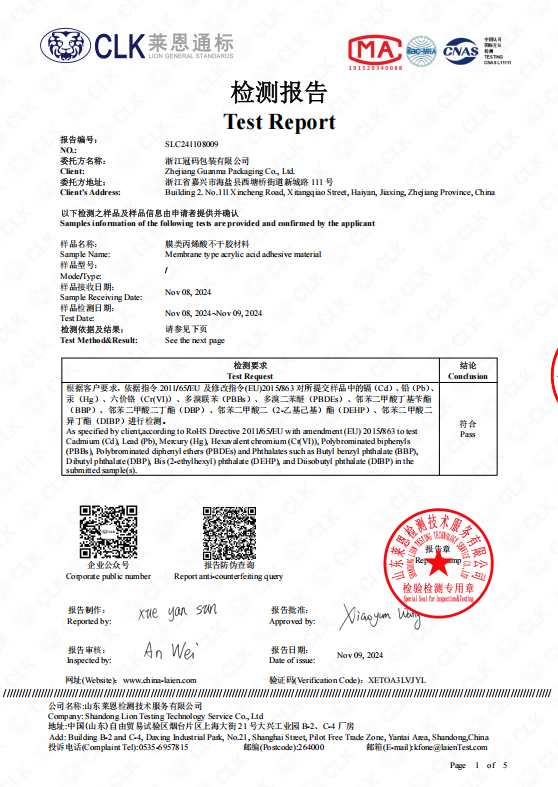
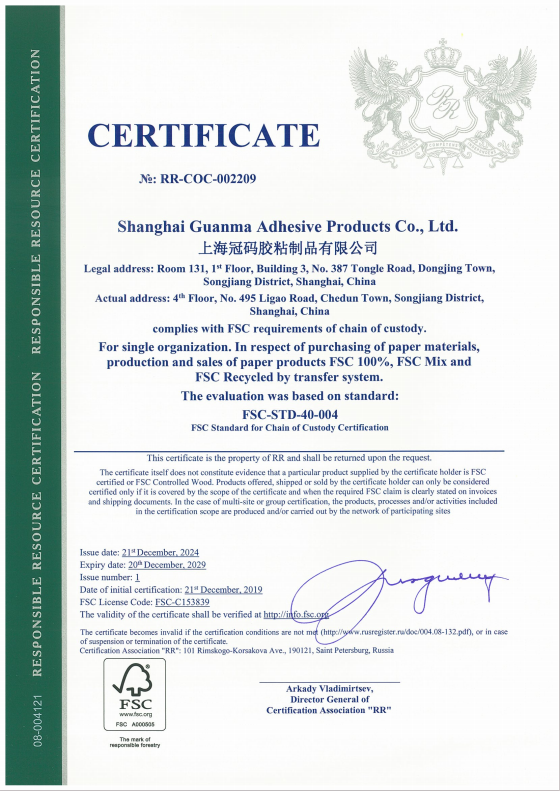
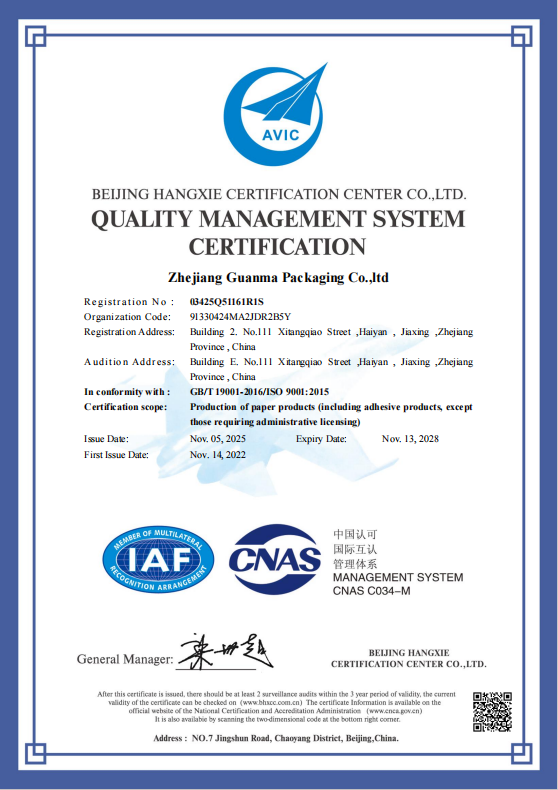
FINAT FTM Methods
European standard for label industry peel adhesion (FTM1 180, FTM2 90), shear hold (FTM8) and tack (FTM9). 35+ years standard. FINAT knowledge base.
ASTM D903 / D3330
US standard peel adhesion methods — D903 (180° peel), D3330 (90° peel), D1876 (T-peel). Used for substrate-matched validation of self adhesive label stock.
FDA 21 CFR 175.105
Indirect food additive scope for adhesive contents used as a component in food-contact packaging. Note the applicability of this to the adhesive side, and not specifically to the facestock – the downstream substrate is assessed separately.
REACH Regulation
EU chemical compliance on SVHC reporting and Annex XVII restricted substances. 2025 active for label adhesive supply chains.
Scope Verification & Sustainability Matters
ASTM D903 is a measurement methodology — it tells the lab how to pull the label, not how the label must perform; the spec lives in the buyer’s qualification document. FDA 21 CFR 175.105 covers the adhesive layer for indirect food contact — it does not certify the facestock or the printing ink. REACH SVHC is a reporting framework — most label adhesive components are below threshold, but newer substances added in 2025 should be reviewed for any custom formulation request. Sustainable practice matters here too: we work with FSC-certified facestock options on request, and glassine release liner is recyclable through dedicated paper-recycle streams where converter infrastructure supports the recovery. Guanma’s compliance documentation explicitly references the scope and the lot-level test data, not the generic standard number.
CLICK ANYWHERE TO CLOSE
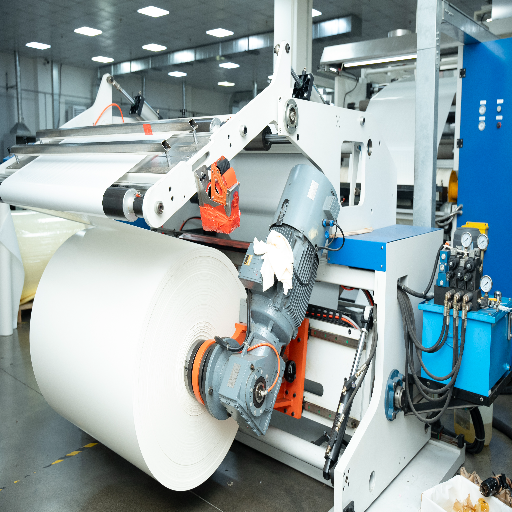
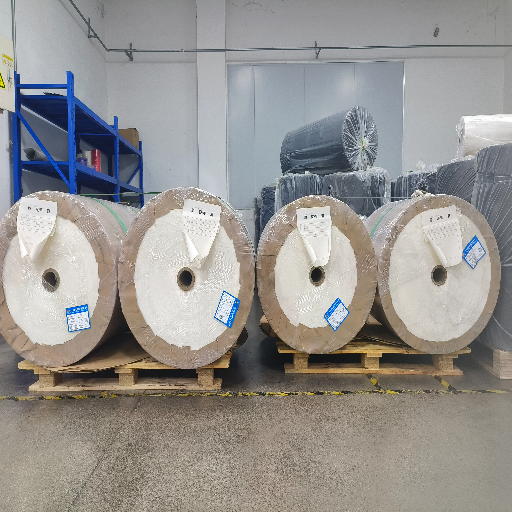
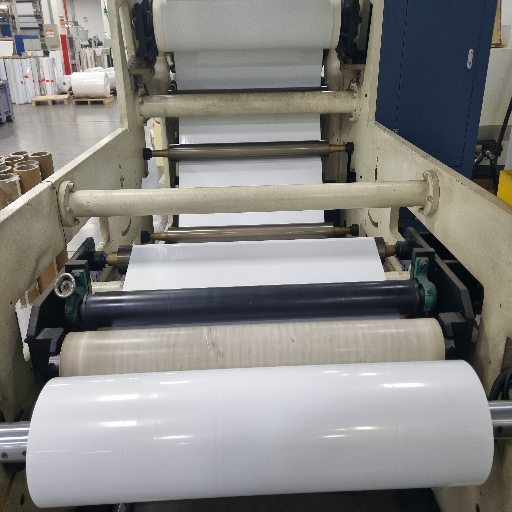
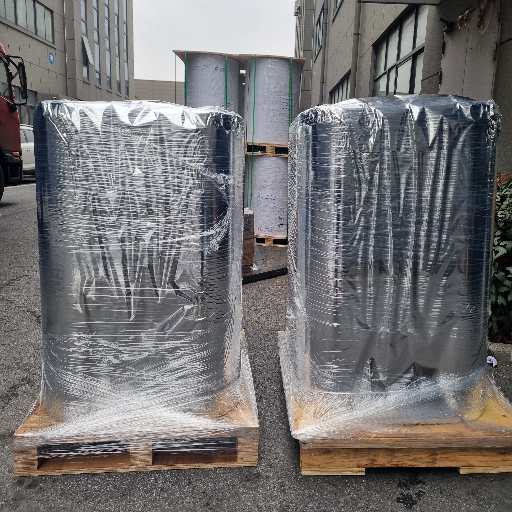
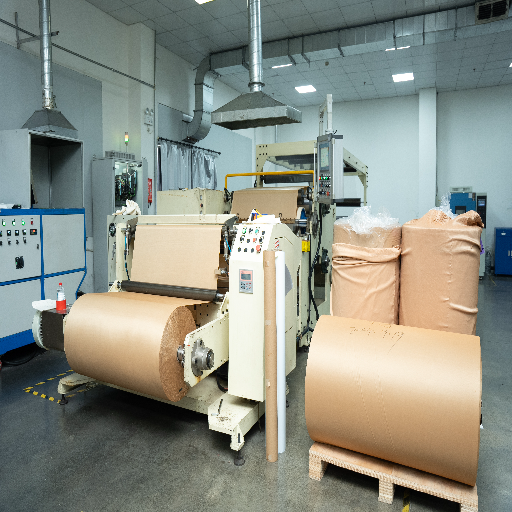
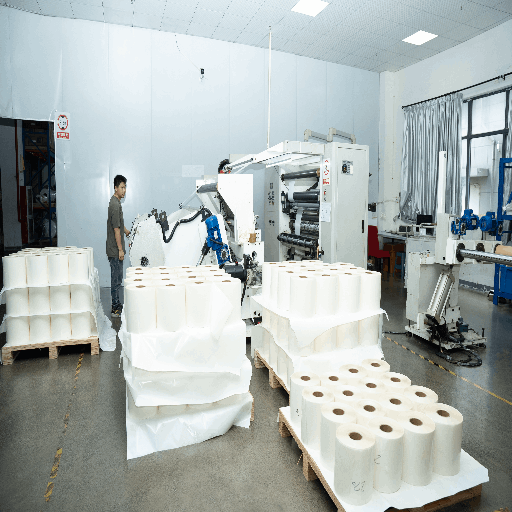
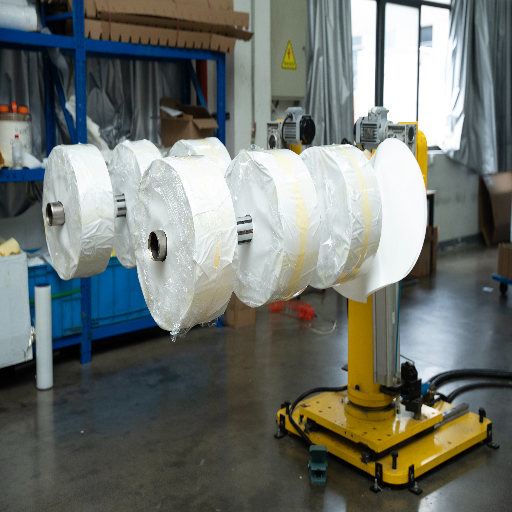
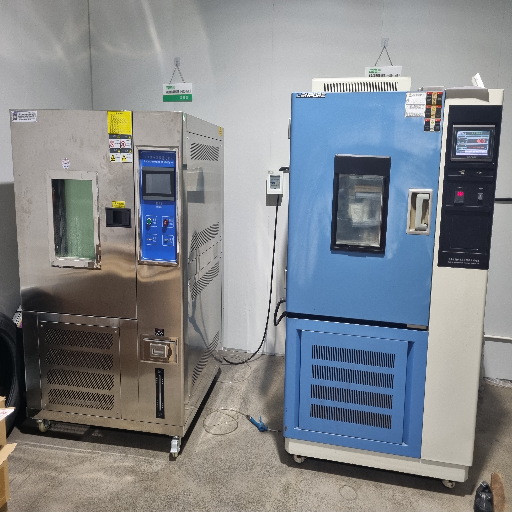
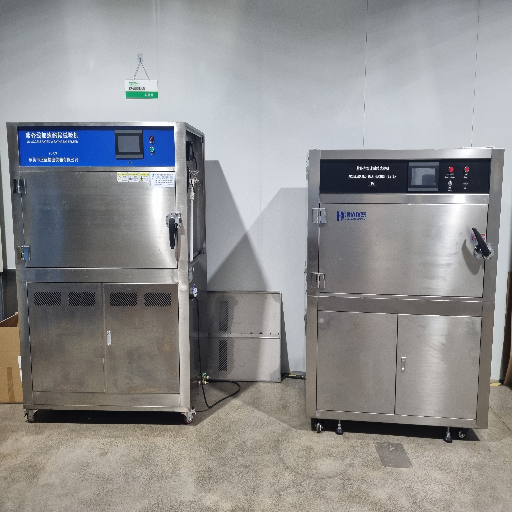
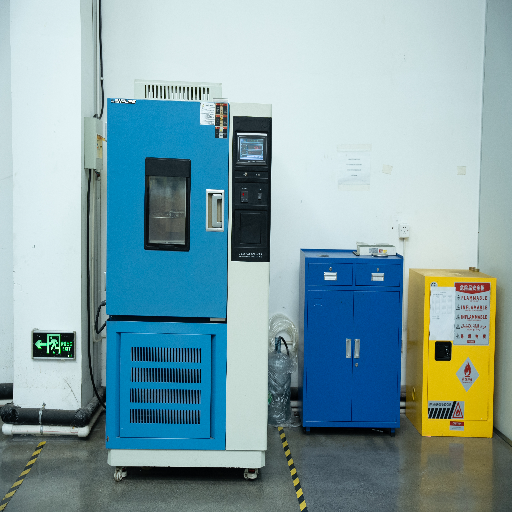
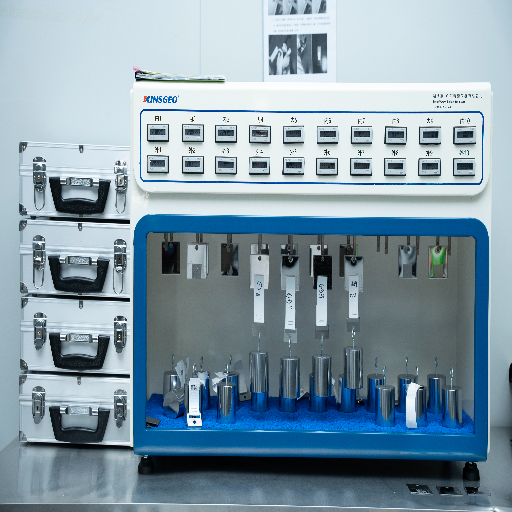
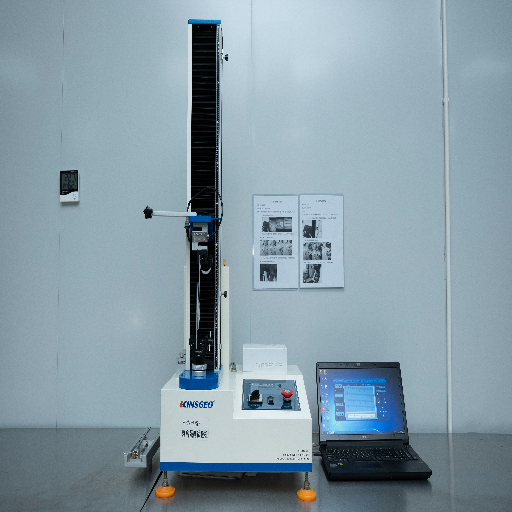
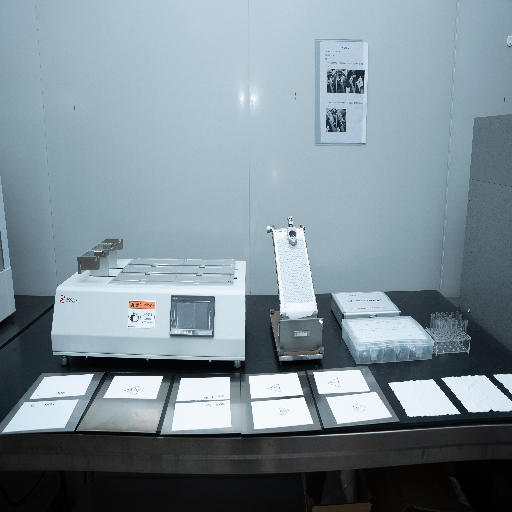
High-Performance Manufacturing & Facilities
Delivering precision-engineered self-adhesive solutions through state-of-the-art production and rigorous quality control standards.

From RFQ to Roll — Lead Time Tiers, MOQ, and Custom Coating Workflow
Self adhesive label material lead time is the procurement variable most suppliers refuse to publish — which means the buyer carries the schedule risk. Guanma publishes lead time tiers and MOQ thresholds so the buyer can plan the shipment, not chase it.
Lead time tiers
| Tier | Scope | Lead Time (ex-works) | MOQ baseline |
|---|---|---|---|
| In-stock standard | Catalogue G-codes, standard slit widths, full master roll | 7–14 days | 1 master roll (~2,000 lin. m) |
| Semi-custom | Custom slit width / custom liner combination on standard adhesive | 21–30 days | 3 master rolls or equivalent jumbo |
| Full custom | New facestock spec, new adhesive formulation, or non-standard liner system | 45–60 days | Volume to be confirmed during R&D scope |
MOQ values are baseline references. Specific quotation depends on slit width, total linear meters, and packaging configuration. Contact Guanma sales for application-specific MOQ confirmation.
Custom coating workflow
-
RFQ & application outline
Buyer describes end-use, substrate, environment and printing system. Guanma application engineer responds to request with G-code or identifies request as custom.
-
Sample dispatch
7-day free sample for in-stock G-codes; custom samples by arrangement.
-
Validation test
Buyer runs FTM1 / FTM2 or substrate-matched peel test against own application. Guanma supplies internal QC report for the lot.
-
Proforma invoice & PO
3-day PI turnaround. Payment terms confirmed by tier.
-
Coating run
Master coating on TH or VN factory line, depending on origin selection. Slit and packed to spec.
-
QA & inspection
Coating uniformity, peel force per lot, and dimensional check before container loading.
-
Shipment
FOB Bangkok / Ho Chi Minh; documents include origin certificate, REACH declaration, and lot QC report.
FAQ — Sourcing Self-Adhesive Label Stock from Asian Manufacturers
PET (polyester) facestock is denser, thinner, and has higher tensile strength — typical 36–75 µm thickness with excellent dimensional stability and tear resistance. It runs well on high-speed thermal transfer and UV inkjet, and it handles temperature extremes (−40 to +150 °C). PP synthetic paper (biaxially oriented polypropylene with synthetic-paper surface treatment) is thicker (70–90 µm), more opaque, and gives a paper-like appearance with film-grade durability — preferred for beverage labels and freezer applications where a paper look is required but cold-temperature performance is critical. The practical decision usually comes down to two questions: does the application need the label to look like paper to the end consumer (PP synthetic wins), and does the application need a very thin profile under a heavy clear-coat or under a small-diameter wrap (PET wins). Hybrid stacks combining a PET facestock with a paper-look topcoat exist but raise cost and rarely outperform a properly chosen PP synthetic for the same end-use.
Hot-melt PSA with a properly chosen tackifier system holds adhesion below −25 °C and remains flexible down to −40 °C. The G-07 (PP synthetic + hot-melt + glassine) stack is the standard freezer recipe — it retains 92–96% of initial peel force after 30 days at −40 °C. Generic water-based or low-glass-transition acrylic adhesives become brittle in this range and fail at the label edge first. We do not recommend permanent acrylic adhesives for sustained sub-zero cold-chain unless the label is applied to the substrate above 0 °C and only enters the cold zone afterwards.
MOQ for good quality large-gauge G-codes with custom slit and ordinary liner is 3 master rolls (approx. 6,000 lin m of jumbo, contingent upon slit yield). Custom adhesives and liner combinations (beyond the glassine / CCK we typically use) are a factor of batch size due to coating line needs. Specific MOQ arrives during RFQ.
These are very close. Bangkok ships via Laem Chabang port (4-6 weeks to US West Coast); Binh Duong ships via Cat Lai or Cai Mep port (4-5 weeks to US West Coast). Transit time is usually not the determining factor – it is container availability for the specific origin in the specific quarter, and the tariff schedule at time of customs declaration. Confirm both origin options in the RFQ; final origin selection is made in PI stage, with the current container availability and the buyer’s preferred HS treatment taken into consideration.
Glassines are a super-calendered kraft with a polyvinyl alcohol top coat, frequently used in European supply chains – they are thinner, glossier and give lower release force (5-12 cN/25mm at 180 peel). CCK (clay-coated kraft, more prevalent in North American supply chains) are heavier, more dimensionally stable, and give higher release force (8-18 cN/25mm). Besides high-speed dispensing, Glassines are better suited for high temperature, high tension, or wide-web stability. Both are available across the Guanma matrix; application requirement defines selection, not customer or vendor predilection.
Guanma supports glue sourcing at the food-contact label and tag conversion stage with: (1) declaration of compliance for FDA 21 CFR 175.105, in scope of the indirect-food-contact scope; (2) FCM raw material composition statement; (3)REACH SVHC declaration; (4) lot-level QC data including peel force and adhesive residue retention testing. Note that 21 CFR 175.105 applies to the adhesive layer for indirect-contact applications – clarity for direct-contact substrates is a separate application project, which we support but cannot always endorse off the shelf.
Catalogue G-exports ship as free samples within 7 days of application – sheets of A4 or 200 mm 5 m mini-rolls – at buyer courier charges. Bespoke samples within R&D scope, the fee deducts to first PO. We strongly suggest substrate-matched validation prior to commercial order.
Initial order: 30% T/T deposit against PI, 70% against B/L copy (or L/C at sight in larger volumes). Repeat order: net-30 or net-60 against B/L, depending on volume. Origin certificates issued by Form D may be recorded from order one.
Trending now